
 See Our Latest Article on HelloNation

Back strength is not only about lifting weights. The muscles of the abdomen, hips, pelvis, and upper back all help support the spine during walking, sitting, bending, gardening, driving, and household tasks. A simple routine performed consistently can improve strength and movement without requiring a gym or specialized equipment.
For local residents, exercise may also need to fit around seasonal activities such as shoveling, raking, snow preparation, yard work, and long periods spent sitting indoors during colder weather. The safest approach is to begin with controlled movements and gradually increase the challenge.
Which exercises are generally helpful for back strength?
Exercises that build core stability, hip strength, and endurance are usually more useful than movements that repeatedly bend or twist the spine. The following routine is appropriate for many adults who do not have a serious injury or medical condition affecting the back.
Move slowly, breathe normally, and stop if an exercise causes sharp, spreading, or worsening pain.
Abdominal bracing
Abdominal bracing teaches the muscles around the trunk to support the spine without excessive movement.
1. Lie on your back with your knees bent and feet flat on the floor.
2. Gently tighten your abdominal muscles as if preparing for a light cough.
3. Keep breathing while holding the contraction for 5 to 10 seconds.
4. Relax fully and repeat 5 to 10 times.
The goal is a gentle, steady contraction rather than forcefully pulling the stomach inward. The American Academy of Orthopaedic Surgeons includes abdominal bracing in its spine-conditioning guidance. ([orthoinfo.aaos.org](https://orthoinfo.aaos.org/globalassets/pdfs/spine-conditioning-program_3-20-25.pdf?utm_source=openai))
Bridge
Bridges strengthen the buttocks and the muscles that help control the pelvis. Stronger hips can reduce the amount of work placed on the lower back during standing and lifting.
1. Lie on your back with knees bent and feet about hip-width apart.
2. Tighten your abdomen gently.
3. Press through your feet and lift your hips until the body forms a comfortable line from the shoulders to the knees.
4. Pause for 2 to 3 seconds.
5. Lower slowly.
Begin with 8 repetitions. Avoid arching the lower back or lifting the hips higher than feels comfortable.
Bird-dog
The bird-dog develops coordination and endurance across the back, abdomen, hips, and shoulders.
1. Start on your hands and knees with the hands below the shoulders and knees below the hips.
2. Tighten the abdomen lightly while keeping the neck relaxed.
3. Extend one leg behind you without rotating the pelvis.
4. If steady, extend the opposite arm forward.
5. Hold for 3 to 5 seconds, then return to the starting position.
6. Alternate sides.
Start by moving only one arm or one leg at a time. Progress when you can keep the back and pelvis still.
Side plank from the knees
A modified side plank strengthens the side abdominal muscles, which help control bending and rotation.
1. Lie on your side with knees bent.
2. Place the elbow beneath the shoulder.
3. Lift the hips gently from the floor while keeping the shoulders, hips, and knees aligned.
4. Hold for 5 to 10 seconds.
5. Lower with control and switch sides.
Perform 3 to 5 repetitions per side. This exercise should create muscular effort along the side of the trunk, not sharp pain in the shoulder or back.
Sit-to-stand
Strengthening the legs and hips makes everyday lifting and rising easier while reducing the temptation to rely on the lower back.
1. Sit near the front of a sturdy chair.
2. Place the feet beneath the knees.
3. Lean forward slightly from the hips while keeping the back comfortable.
4. Stand without using the hands if possible.
5. Slowly sit back down.
Try 8 to 12 repetitions. This movement is especially practical for people who spend much of the day seated.
How often should these exercises be performed?
For general conditioning, two or three sessions each week may be enough to begin. Abdominal bracing and gentle walking can often be included more frequently if they remain comfortable.
A reasonable starting routine is:
- Five minutes of easy walking
- Abdominal bracing
- Bridges
- Bird-dog
- Modified side planks
- Sit-to-stand repetitions
- A brief, comfortable cool-down
One set of each exercise is sufficient at first. After several sessions without increased symptoms, add repetitions gradually rather than making every exercise harder at once.
Walking is also valuable because it builds general endurance and encourages regular movement. MedlinePlus advises staying as active as possible when there are no warning signs of a serious condition, while also avoiding activities that clearly worsen symptoms. ([medlineplus.gov](https://www.medlineplus.gov/ency/article/002119.htm?utm_source=openai))
Should stretching be included?
Stretching can help if stiffness limits movement, but flexibility exercises should not be forced. Gentle hip, thigh, and back movements may be useful after a short warm-up or at the end of a walk.
Try lying on the back with the knees bent and slowly allowing both knees to move a small distance from side to side. Another option is a gentle hamstring stretch using a towel behind the thigh, keeping the knee slightly bent. Hold a comfortable stretch for about 15 to 30 seconds without bouncing.
Stretching should feel mild. Numbness, tingling, electric sensations, or pain traveling into the leg are reasons to stop and reassess the exercise.
What should be avoided during a flare-up?
A new episode of back pain does not always require prolonged bed rest, but it may require temporarily reducing the activities that provoke symptoms. Heavy lifting, repeated twisting, deep forward bending, and high-impact exercise can be difficult during the early stages of an injury.
During seasonal chores, divide heavier tasks into smaller sections. Keep loads close to the body, bend through the hips and knees, and avoid twisting while carrying. Asking for help with an awkward or unusually heavy object is safer than trying to manage it alone. ([medlineplus.gov](https://www.medlineplus.gov/ency/article/007425.htm?utm_source=openai))
A common misconception is that soreness automatically means an exercise is effective. Mild muscle fatigue may be expected, but sharp pain or symptoms that continue to worsen afterward are not useful training signals.
When is medical evaluation necessary?
Exercise is not appropriate for every type of back pain. Seek prompt medical evaluation for back pain accompanied by new loss of bladder or bowel control, numbness around the groin, significant leg weakness, fever, unexplained weight loss, or severe pain after a fall or other trauma.
A healthcare professional should also evaluate symptoms that persist, repeatedly return, interfere with sleep, or travel down an arm or leg. People with osteoporosis, recent surgery, pregnancy-related concerns, known spinal conditions, or major injuries may need an individualized exercise plan before beginning strengthening work.
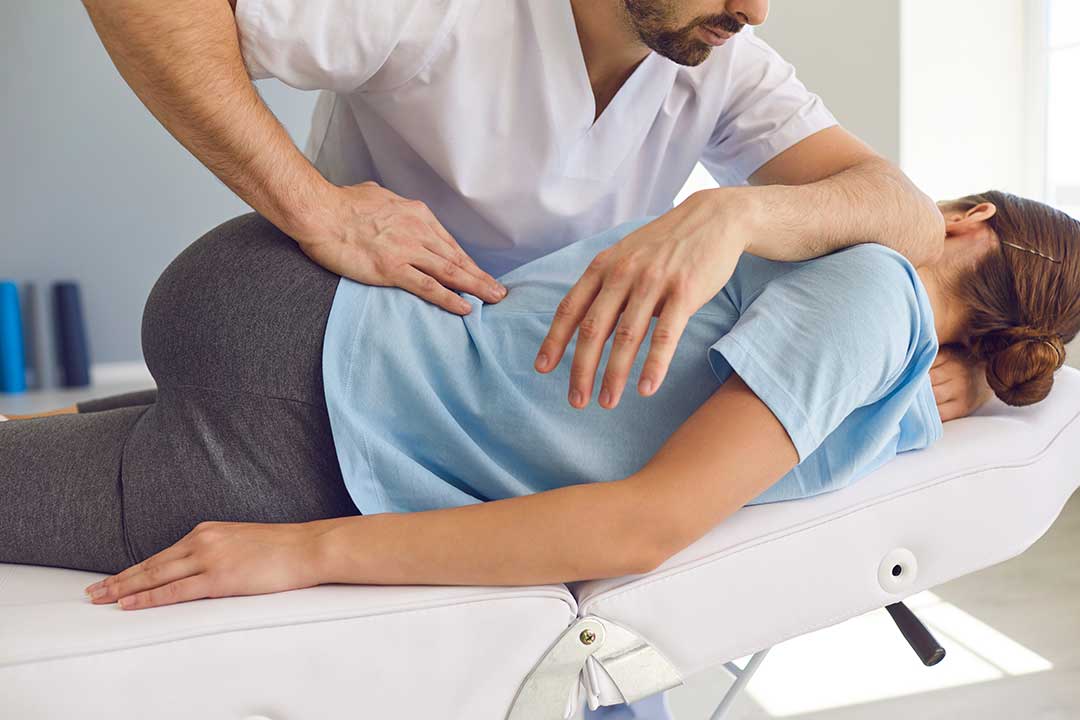
A chiropractor, physician, physical therapist, or other qualified healthcare professional can help determine whether the symptoms fit a routine strengthening program or require a different approach. The right exercise depends on the cause of pain, current mobility, strength, age, and other health conditions.
For most healthy adults, the foundation is straightforward: move regularly, strengthen the trunk and hips, progress gradually, and treat worsening symptoms as information rather than something to push through.
